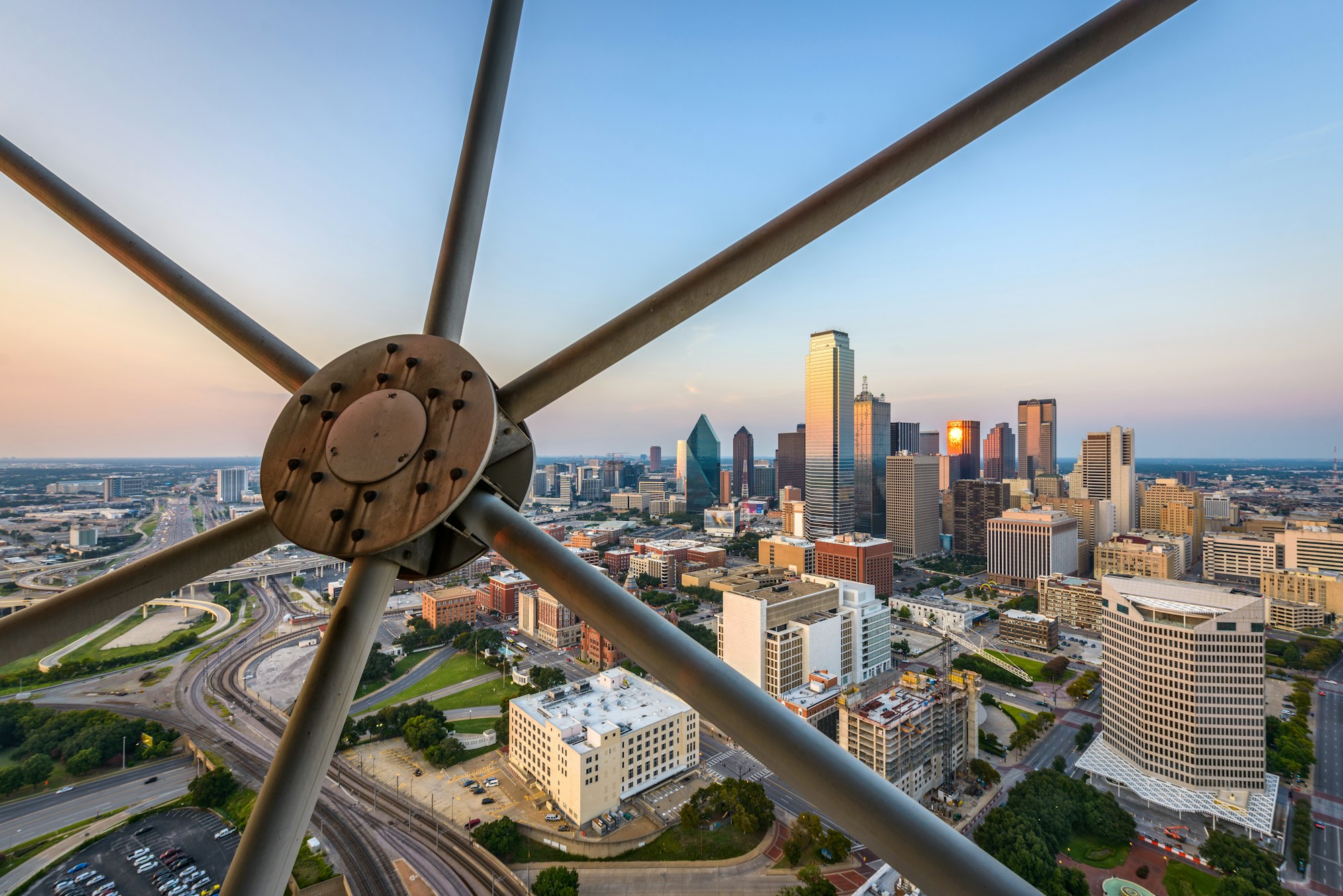
Dallas–Fort Worth is one of the most sought-after commercial real estate markets in the United States. Investors ranked it the No. 1 U.S. target for five consecutive years in CBRE’s North American Investor Intentions Survey, and the Urban Land Institute and PwC named it the No. 1 market to watch for the second consecutive year in their Emerging Trends in Real Estate 2026 report.
With more than 8.4 million residents and Dallas’ commercial sales volume alone topping $10.4 billion in 2025—up roughly 37% year over year—capital continues to flow into the region. That competition is what makes buying well difficult: strong assets sell quickly, pricing is tight, and the margin between a sound purchase and an expensive mistake is thin.
Commercial property acquisition is the process of sourcing, underwriting, financing, and purchasing income-producing or development real estate. The sections below explain where DFW’s opportunities are and how disciplined buyers approach commercial property acquisition in Dallas–Fort Worth.
Why Dallas–Fort Worth Leads the Nation for Commercial Property Acquisition
DFW’s fundamentals rank among the strongest in the country, which is why private buyers, family offices, and REITs (real estate investment trusts) continue to compete for assets here:
- Top-ranked demand. No. 1 investor target for five years running (CBRE) and No. 1 market to watch for 2026 (ULI/PwC).
- Population and job growth. Corporate relocations from the coasts have helped produce one of the nation’s highest concentrations of new-home starts.
- A diversified economy spanning logistics, technology, healthcare, finance, and life sciences, so no single sector dictates demand.
- Stabilizing yields. Prime, high-quality assets trade around a low-to-mid 5% cap rate—annual net income as a percentage of price—while value-add properties sit closer to 6%. Value-add and core-plus strategies—which target moderate improvements for higher returns—remain among the most favored by investors.
- Depth and liquidity. The region spans 11 counties and dozens of submarkets, giving buyers room to find mispriced opportunities.
Industrial and grocery-anchored retail have drawn the most investor interest, though opportunities exist across office, multifamily, and mixed-use. Demand is durable, but returns still depend on buying in the right place at the right time.
Where to Buy: DFW Submarkets and ZIP Codes to Watch
Acquisition is a local exercise. The table below compares six of the metroplex’s most active commercial submarkets.
| ZIP | Submarket | Why buyers target it |
| 75201 | Downtown Dallas | Urban core with office-to-residential conversions, mixed-use projects, and high foot traffic |
| 76102 | Downtown Fort Worth | Revitalized central district with strong retail, hospitality, and cultural-district demand |
| 75034 | Frisco | Among the fastest-growing U.S. cities — retail, medical, and mixed-use momentum |
| 75024 | Plano (West) | Corporate campuses plus the $4 billion Texas Research Quarter life-sciences project nearby |
| 75039 | Irving (Las Colinas) | Central location, dense daytime population, and a major corporate presence |
| 76011 | Arlington | Entertainment-district anchor between Dallas and Fort Worth with heavy visitor traffic |
Established cores such as Downtown Dallas (75201) and Las Colinas (75039) tend to offer income stability. Higher-growth suburbs like Frisco (75034), Plano (75024), and Arlington (76011) tend to reward buyers who enter ahead of the next wave of housing and demand.
What Commercial Property Acquisition Actually Involves
Commercial property acquisition in Dallas–Fort Worth is a process, and the most costly mistakes happen when a step is skipped. Experienced buyers generally work through the same sequence.
- Define the strategy. Core, core-plus, or value-add? The target return determines which assets and submarkets make sense.
- Assess intrinsic value. Blazing Hospitality evaluates each property on three factors: its current value, its highest and best use (the most productive, legally permitted, financially feasible use of the site), and its projected future value—informed by comparable sales, infrastructure plans, and demographic shifts.
- Underwrite conservatively. Model net operating income (rental income after operating expenses), the cap rate, financing costs, and realistic rent growth before settling on a price.
- Complete due diligence. Verify title, zoning, entitlements (the permits and approvals needed to build), environmental conditions, and the quality of existing leases.
- Structure the deal and financing. In ground-up projects, entitled land often appreciates enough to cover the loan down payment, which reduces the additional capital required; surplus entitled land and pad sites can then be sold to generate equity for the project.
How to Recognize an Undervalued DFW Commercial Property
The strongest acquisitions tend to share a few signals:
- Path-of-growth location. New highways, utilities, and housing arrive before retail and comparable sales adjust.
- Below-market or misused land. Vacant, dated, or underutilized parcels with a clear higher-value use.
- Strong rooftops and traffic counts that current pricing has not captured.
- Entitlement upside—land that can be rezoned, subdivided, or built at higher intensity.
- Grocery-adjacent or power-center positioning (a power center is a large open-air retail development), which supports resilient, financeable demand.
Two Ways to Enter the DFW Market
Participating in the region’s growth does not require becoming a full-time developer.
- Active acquisition. Business owners and developers can buy, build, or reposition assets directly. This path offers control and hands-on upside, along with access to tax tools such as a 1031 exchange, which defers capital-gains tax when sale proceeds are reinvested in a like-kind property.
- Passive investment. Investors can own a share of a professionally managed commercial project and receive distributions along with a share of the equity created through appreciation and land sales, while an experienced operator handles acquisition, entitlement, construction, leasing, and sale. Many retail assets use triple-net (NNN) leases, in which tenants pay taxes, insurance, and maintenance, which can produce steadier net income.
Each path carries risk, and returns vary with market conditions, financing, and execution. The right choice depends on how much involvement, capital, and time an investor wants to commit.
How Blazing Hospitality Approaches DFW Acquisitions
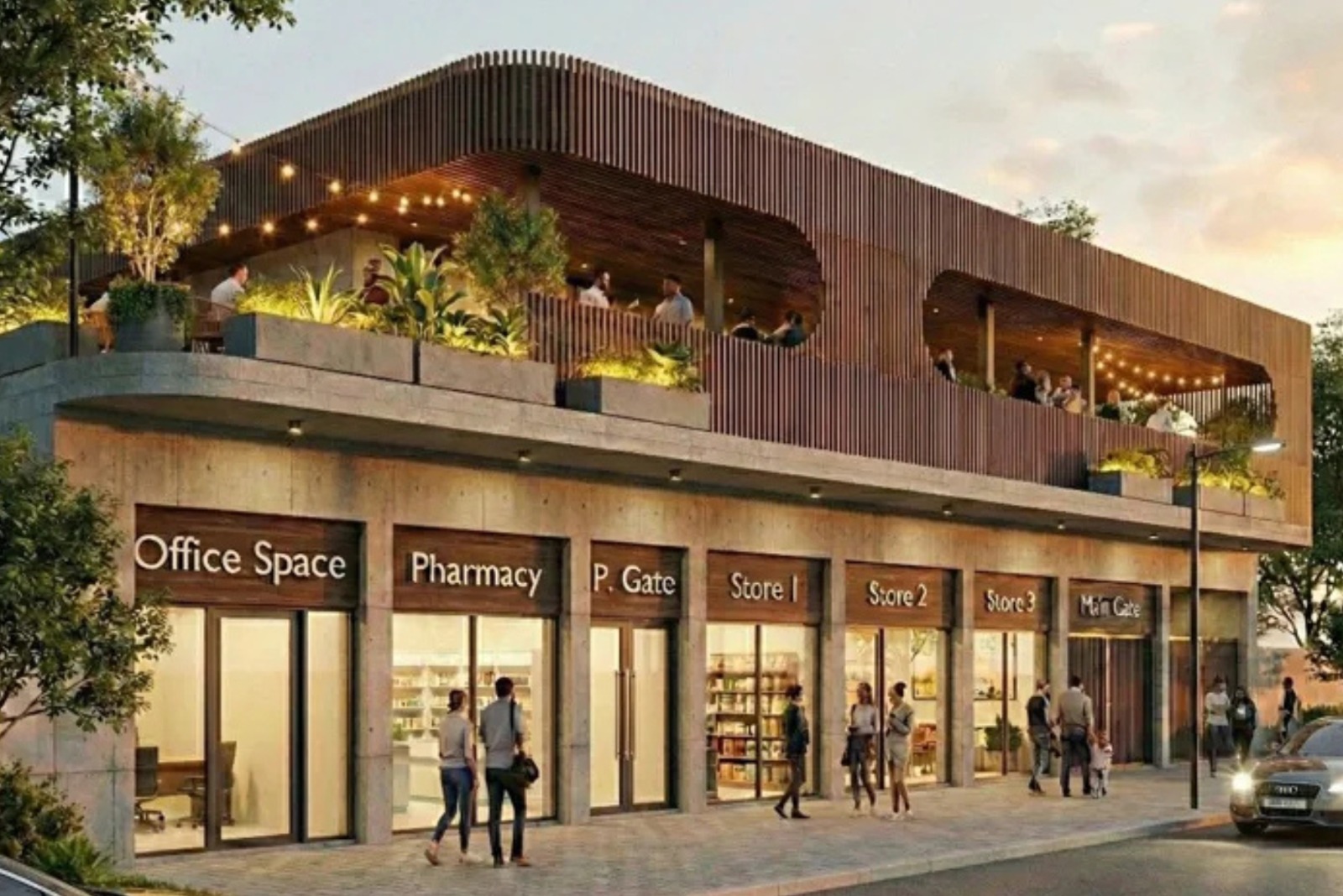
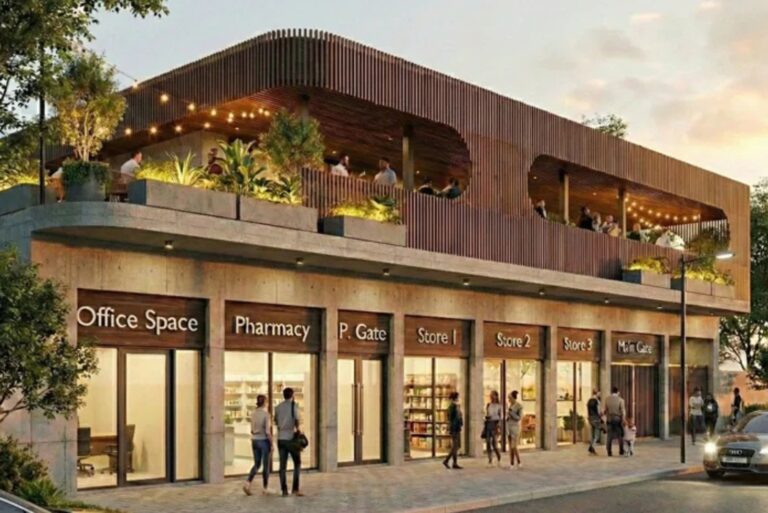
Blazing Hospitality is a Dallas–Fort Worth commercial real estate and retail land development firm that focuses on undervalued or underutilized properties. The firm develops high-visibility, grocery-adjacent retail strips—typically 15,000 to 20,000 square feet—in high-growth DFW submarkets, including the commercial reserves of master-planned communities, where an established customer base and steady demand are already in place.
A representative example is Shops at Main Street in Saginaw, within Tarrant County. The firm acquired a long-vacant parcel at 1005 N. Saginaw Blvd, worked with the city through a Chapter 380 economic development agreement, and developed an 8,000-square-foot multi-tenant center now anchored by national brands including Tim Hortons and Firehouse Subs. The project turned an underused site into a productive, income-generating asset that also added tax revenue and jobs to the community.
Led by Founder and CEO Smit Shah, Blazing Hospitality currently manages 15 active projects and roughly 225,000 square feet of retail under development, guided by core values of transparency, stewardship, and economic empowerment.
Frequently Asked Questions
Q: Where is the best area to buy commercial property in Dallas–Fort Worth?
A: It depends on the goal. Established cores like Downtown Dallas (75201), Downtown Fort Worth (76102), and Las Colinas/Irving (75039) tend to offer stability, while faster-growing suburbs like Frisco (75034), Plano (75024), and Arlington (76011) tend to offer stronger appreciation and value-add potential.
Q: What are typical cap rates in the DFW commercial market?
A: Prime, high-quality assets generally trade around a low-to-mid 5% cap rate, with value-add and lower-tier products closer to 6%. Rates vary by sector, location, and asset quality.
Q: Is Dallas–Fort Worth a strong market for commercial real estate investment?
A: By several independent measures, yes. DFW has been ranked the No. 1 U.S. investment target for five consecutive years and the No. 1 market to watch for 2026, supported by population growth, a diversified economy, and rising transaction volume. As with any investment, outcomes still depend on the specific asset and market conditions.
Q: Can I use a 1031 exchange to buy commercial property in DFW?
A: Yes. A 1031 exchange lets an investor defer capital-gains tax by reinvesting proceeds from a sold property into a like-kind property within IRS timelines. It is a common way to scale a portfolio, but the deadlines and rules are strict, so professional tax guidance is advised.
Q: Can I invest in DFW commercial property without buying it myself?
A: Yes. Passive investment allows an investor to own a share of a managed commercial project and receive distributions and equity without handling acquisition, construction, or tenants.
Q: What types of commercial property does Blazing Hospitality develop?
A: The firm focuses on grocery-adjacent retail strips of roughly 15,000–20,000 square feet in high-growth DFW submarkets and within the commercial reserves of master-planned communities.
Contact Blazing Hospitality About DFW Opportunities
Choosing the right submarket and underwriting a deal accurately takes local knowledge and experience. Blazing Hospitality collaborates with business owners, developers, and investors to evaluate commercial property acquisitions in Dallas–Fort Worth and welcomes inquiries about current opportunities.
For Investment Inquiries: Please call or text [(682) 285-1600](tel:(682) 285-1600), or email info@blazinghospitality.com
For Development or Property Management Inquiries: Please call or text [(682) 285-1600](tel:(682) 285-1600)
Blazing Hospitality is a Dallas–Fort Worth commercial real estate and retail land development firm led by Founder and CEO Smit Shah, focused on transforming undervalued or underutilized properties into high-value assets across Dallas, Fort Worth, and the surrounding metroplex. Market data referenced from CBRE, the Urban Land Institute/PwC Emerging Trends in Real Estate 2026, and CoStar, 2025–2026.